Sunday, November 24, 2013

CIRCLES


INTRODUCTION

The title of my homily is, “Circles.”

When was the last time you drew a circle? 

Was it when you saw steam in a mirror or frost on a window - or you were at Macaroni Grill and there on the paper table cloth - was a box of crayons?

This Sunday we celebrate the Feast of Christ the King.

CIRCLES

The title of my homily is, “Circles.”

Since this feast is trying to get at something - and since the idea of king and kingdom - have sort of slipped away from our political realities  and imaginings - I began wondering where to go with this feast for Christ as King.

I’ve heard people talk about protecting one’s turf - or someone guarding  their territory - so as I began exploring the idea of having one’s territory - space - area - fiefdom - and trying to protect the who and the what within our circles - as well as to keep people out of our space or stuff - or what have you. 

Thinking about all that triggered the idea of reflecting upon circles.

We might not talk about kings and kingdoms - in the year 2013 - except in the UK - the United Kingdom - but we still talk about circles.

Inner circle - outer circle - family circle - political circles.... Do they still have sewing circles? I know they had quilting parties - but are they called “quilting circles” anywhere?

For the sake of a sermon, let me present 3 considerations about circles.

FIRST CONSIDERATION - MAKE A LIST

The first consideration would be to list our circles - our spheres - the circles we spend our time in and life in and with.

In a given week - where are we - where do we spend our time?

Get a piece of paper and draw 5 or 7 circles.

Put a single name in each circle for the 5 or 7 key people in your life. Someone said if you have 5 friends in one’s life, you’re a lucky person.

Get another piece of paper and draw 5 or 7 circles - and list your circles: home, work, organizations, bridge friends or poker buddies, [Is that like the difference between power boat people and sail boat people?] - walking or running or exercise groups - church - book clubs or what have you.

What would happen if someone realized they were the only circle in their life - and they won’t let anyone into their inner circle. Remember the old saying: “A person wrapped up in themselves makes a pretty small package.”

What would happen if someone realized in doing this that we are one big circle - and we're one with everyone on this big round circle called our world?


SECOND CONSIDERATION - POSITIVE OR NEGATIVE?

The second consideration would be to evaluate our circles. 


Which circles give me life? Which circles drain me?

Am a problem or am I a solution in the circles I spin around in.

Some circles are beautiful - life giving - and some circles are vicious circles.

Some of the circles I live and move in give me growth - and some cause me decay and death.

In evaluating our circles we might grab another piece of paper and draw some more circles. We begin thinking outside the box - oops - outside the circles we’ve been focusing on. We realize this image of circle is not flat - just one line - just one dimension like a crayon drawing of a circle  - but we see a ball. We realize the image of a circle - bounces around our brain - and we see that life itself has other types of circles.

There are circles everywhere. We have seen the human cell in drawings. We've seen basketballs and ping pong balls. We see tires and the sun, the moon and the stars. We see necklaces and ear rings with cricles. And we've see those gold circles on fingers - called rings.


We begin thinking about that circle called a wedding ring. If married, how is my marriage going? Are other circles swallowing up my primary relationships? 


When looking up quotes on circles I found the following quote from a 1797 play entitled, The Double Callant  - Act 1, scene ii.- by Colley Cibber [1671-1757]. One of the actors says, “Oh, how many torments lie in the small circle of a wedding ring.” 


One of my favorite singers was Harry Chapin - and I’ve listened to his CD’s while driving many, many a time. I love his song, “All my Life’s A Circle.”  It brings out the over and over and over again we are a circle as we experience in life cycle. “Sunrise and sundown, Moon rolls through the night-time till daybreak comes around.” “Seasons spinning round again, the years keep rolling by.” The song brings out: “Seems like I’ve been here before.” 

Life is déjà vu all over again.

We’re ending this church year this week. We’re heading for one more Family Thanksgiving - and Advent and Christmas - and Christmas shopping - and winter and the return again of snow and cold in the forecast.

Harry Chapin sings that there are no straight lines - “all my roads are bends”.  “There’s no clear-cut beginning and so far no dead ends.”

Harry Chapin died on the road - in a horrible car accident - and his circle ended - yet his songs sing on.

We reflect - that we are continuing the cycle of life of our parents and their parents - and we hope our legacy - our goodness will roll on.

For years I’ve been interested in Native American Spirituality.

Their art work…. their dancing …. their religion …. their lives are very much based on circles.

Black Elk [1863-1950] -  a famous Native American said, “Everything an Indian does is in a circle, and that is because the power of the world always works in circles, and everything tries to be round.  In the old days when we were a strong and happy people, all our power came to us from the sacred hoop of the nation, and so long as the hoop was unbroken the people flourished.”  From Black Elk Speaks, Being the Life Story of a Holy Man of the Oglala.

That quote  has triggered for me the question why they didn’t come up with the wheel - instead of long tent poles being dragged along the ground pulled by horses.

So my second consideration is to evaluate - wonder - ask questions about our circles. Are they giving me life or draining me?

THIRD CONSIDERATION - BREAKING THE CIRCLE

We were taught in Theology and Bible Studies early on - that Judaism and Christianity - broke the circle - and became linear.

Christ came to change the world!

For doing so he was killed - murdered - as we heard in today’s gospel.

A message for us is where do I have to change and grow. Where do I have to die to self - so that I can rise to newness of life.

For example - relevant to what I’m trying to say here is the famous little poem called, “Outwitted” by Edwin Markham 1852-1940]

“He drew a circle that shut me out -
Heretic, rebel, a thing to flout.
But Love and I had the wit to win:
We drew a circle that took him in.”

That is basic Christ. Here he is in today’s gospel with two men - one shutting him out and the other bringing Christ in - and Christ brings him into paradise.

Jesus formed his small circle - and he broke the cycle Judaism was going in -  and his small circle now includes well over a billion people called Christian.

We have the choice to close in on ourselves - or to expand.

I have always understood the word Catholic to mean “All” or “Universal” “the whole catalogue of people” Kata Holos in Greek.


I don’t know about you - but so far I am enthused - celebrating - that our new Pope seems to be opening up the edges of some of the closed circles in Catholicism - and I hear about people wanting back into the circle called the Body of Christ. Amen.
HAVE WE FORGOTTEN 
ABOUT HUBERT HORATIO 
HUMPHREY? 


Quote for Today - Sunday - November 24, 2013


"Compassion is not weakness, and concern for the unfortunate is not socialism."

Remark by Hubert Horatio Humphrey [1911-1978]


Saturday, November 23, 2013

DEATH


Quote for Today - Saturday - November 23, 2013 

"A painting on a canvas of infinite size, worked on eternally, would be without focus, meaning and probably without beauty.  A painting, as life, needs limits.  While I have an almost insatiable craving for knowledge, I believe death to be the final and perhaps greatest teacher - the one who provides the key to the ultimate questions life has never answered.  In my darkest hours I have been consoled by the thought that death at least is a payment for the answer of life's haunting secrets."

Morris B. Abram, in The Wall Street Journal, November 28, 1988

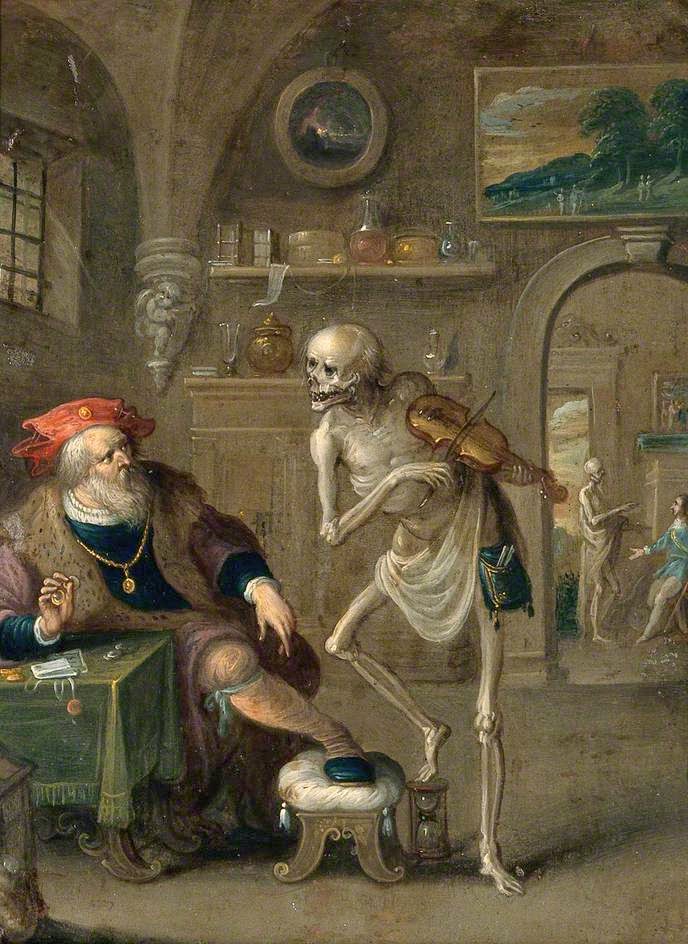
Painting: "Death and the Miser" by Frans Francken II [1581-1642]

QUESTION: Besides the hour glass under the skeleton's right foot, what do you see in this painting?

Friday, November 22, 2013

CHANGE

Quote for Today - Friday - November 22, 2013


"People change and forget to tell each other."

Lillian Hellman, Toys in the Attic, Random House, 1960

Questions:

What happens if the person who changes doesn't know it herself or himself?

What happens if everyone sees specific changes except the person who has changed?

Are we talking about negative or positive changes here?

Isn't change gradual?

How have I changed in the past year, 2 years, 10, years, in my life? Please explain a change to oneself first? Be specific. Then ask others if they have seen any changes in me. Ask them to be specific. Thank you!


Thursday, November 21, 2013

SCARS


Quote for Today - November 21, 2013

"You know what happens to scar tissue. It's the strongest part of your skin."

Michael R. Mantell, San Diego police psychologist, On psychological recovery of disaster victims, New York Daily News, December 14, 1986

Wednesday, November 20, 2013

LISTENING 
TO THE WORLD


Quote for Today - November 20, 2013

"If the church doesn't listen to the world, then the world will never listen to the church."

Bernard Haring,
 New York Times, June 14, 1964

Tuesday, November 19, 2013

FROM A DISTANCE


INTRODUCTION

The title of my homily for this 33 Tuesday in Ordinary Time is, “From A Distance….”

This morning I’d like to make a few comments about the advantage of hindsight - history -  distance - Monday morning quarterbacking….

Hindsight  should help foresight!

Review can bring renew.

TODAY’S READINGS

We’ve heard these readings many a time - but what do we hear this time - this year - this day.

Last night the theme of “From a Distance” hit me.

The old man - Eleazar -  in the first reading from 2nd  Maccabees 6: 18-31 -  makes his decision not to eat forbidden food - pork - based on the implications and consequences - if he goes against his religious practices.  His decision would mean death - but for the sake of transparency - he has seen a lot and lived a lot - and most of his life is behind him.

In the gospel, Zacchaeus goes on ahead of the crowd - till he found a tree - climbed it  - and saw Jesus and Jesus saw him - from a distance.


 HISTORY

And the rest is history and the mystery of history.

What do I see now that I wasn’t seeing 20 years ago?

How many times have we heard and then said ourselves, “If I knew back then, what I know now ….”?

 What do I know now - that I didn’t know back then?

Around 4 PM in the afternoon I like to take a 45 minute walk from St. Mary’s front door - down Newman Street - past the playground at the bottom of  our street with all those little kids playing there - and their moms talking - then move across to Ego Alley and then go through the Naval Academy - see all those young men and women running past me - exercising - practicing football, football, football - lacrosse, lacrosse, lacrosse - and Frisbee, Frisbee, Frisbee, etc. etc. etc.

I’m looking at everything through fences and off to the side - and from not being in the middle of it all.

At the practice football field they have these big platforms way up in the air - with people up there with cameras - videoing the football team  as they practice, practice, practice. What do they see from way up there that folks are not seeing from the ground?

Zacchaeus climbed the tree and saw Christ and Christ saw him - and the rest is history and mystery.

I would assume coming to church - helps us see our life - from the edge - from the outside - from a platform.

I would assume that age gives wisdom - but like experience - as someone said: We can have 20 years experience or 1 years experience 20 times.

I remember a speaker saying somewhere along the line - a lady named Pat Livingston - keep asking: What’s the lesson here? What’s the learning here?

CONCLUSION

The title of my homily is, “From A Distance….”

Today some learnings are: Take walks. Step back. See the big picture. Talk with others about one’s experiences. Write your autobiography. Distance yourself from yourself. Let’s go to the videotape. Check things out - and learn the lessons from all around us.

It’s always been my take that Jesus got his wisdom from not just going to the mountain but also from his walking around town - especially listening to people in the marketplace. 

Surprise! Check out today’s gospel again and again. See what Zacchaeus saw when he climbed a tree. Listen to what he says. He saw more. He saw the poor. He saw his life in a new way - its implications and its possibilities.


Surprise! Jesus ended up getting a meal out of the deal. I wonder if he served pork!
KEEP TALKING! 
I'M TRYING TO 
LISTEN! 

Quote for Today - Tuesday - November 19, 2013


"The reverse side also has a reverse side."

Japanese Proverb

Japanese painting by trinifellah

Monday, November 18, 2013

LEARNING HOW TO PRAY:
TWO GOOD QUESTIONS

INTRODUCTION

The title of my homily for this 33 Monday in Ordinary Time is, “Learning How to Pray: Two Good Questions.”

SURVEYS

In various surveys that ask people what they want us to preach about from the pulpit, I’ve noticed people want stuff on spirituality and stuff on how to pray.

This homily will give one more lesson on how to pray.

So the title of my homily is, “Learning How to Pray: Two Good Questions.”

THE FIRST QUESTION

The first question is in today’s gospel: And Jesus said, “What can I do for you?”

The blind man of Jericho wanted to see, so he called out to Jesus to take pity on him. He had heard Jesus was walking by. So Jesus heard him yelling and stopped to ask him, “What can I do for you?”

And the blind man answered the obvious, “I want to see.”

So, if you want one more lesson on how to pray, there it is. Find yourself in your place of prayer - whether its in church or in the Eucharistic chapel, whether it’s in a Lazy Boy chair or at the kitchen table.  Wherever, whenever, you pray, in your good place of prayer, car, church, chapel or chair - after acknowledging God’s presence, hear Jesus asking you, “What can I do for you?”

That’s the first question.

It’s like the salesperson at Nordstrom’s or a waitress or waiter at Macaroni Grill coming up to us and asking, “What can I do for you?” Or “What can I get you?” Or “What do you want?” Or "What are you looking for?"

So picture yourself praying. Picture Jesus asking us, “What can I do for you?”  

What would you answer?

Would it be, “I want more patience.” Or “I want to be more understanding.” Or “I want a better attitude towards my son-in-law.” Or “I want to love more.”  Or, “I want to laugh more.”  Or, “I want to pray better.”

THE SECOND QUESTION

The second question is not in the Scriptures as is, but here it is, Ask God: “What can I do for You?”  and then listen. Then pause. Then be quiet as you sit there in prayer. Then hear what Jesus says to you. It might be words like the following:

“Did you ever thinking of visiting that old lady two doors down. Nobody seems to visit her.”

“Did you ever think of really listening to so and so and not just being silent with her and then running?”

“Did you ever think you might be much happier if you stopped whining and complaining and you started celebrating each day of life as it comes - with a joyful spirit?”

"Did you eve take me serious when I said, ‘Stop  to see the birds of the air and the lilies of the field. Okay it’s November. Well see the squirrels and hear the crunch of crisp brown leaves on the ground when kids love to pounce through the leaves or kick them up in the air or fall into them.’?”

CONCLUSION

So today’s homily provides a lesson plan on how to pray and I gave two good questions;

1) Hearing God or Jesus saying to us, “What can I do for you?”


2) Hearing ourselves asking God, “Hey God, what can I do for you?”

MORE OR LESS?


Quote for Today - Monday - November 18, 2013


"Less is more."

Ludwig Mies Van Der Rohe, On restraint in design, New York Herald Tribune, June 28, 1959

COMMENT AND QUESTIONS:

To which Robert Venturi said  in 1969, "Less is a bore."  Time Magazine March 3, 1986.

Which would be your comment?

More or less, what's your take on an egg?

Sunday, November 17, 2013

YOU CAN’T DO THAT!


INTRODUCTION

The title of my for this homily - for the 33 Sunday in Ordinary Time, Year C - is, “You Can’t Do That!”

How many times has that been the bottom line? We experience frustration or hurt or disappointment - and we say of God or others, “Hey you can’t do that to me!” 

We’re moving along and someone does something that we don’t want them to do. We don’t expect them to do what they are doing or have done.  And we scream inwardly or mutter outwardly, “Oh no!” 

Or we think: “Oh no - not again!” Or, “You can’t do that!” Or “Dang it!” Or much worse!

TODAY’S READINGS

Today’s readings are these end of the year readings and every year when we come to them,  I think inwardly: “Oh no! Not again!”

Give me a parable or a healing story or a good moment about Jesus helping someone.

Nope. Once more - when I spot these readings I hear my moan: “Oh no! More bombastic apocalyptic language!”

Once more we have  these end of the year - these near the end of  gospel - passages - before we get to the Palm Sunday and Holy Week and Easter readings.

We have them every year for about 3 weekends. “Ugh!”

They talk about earthquakes and fires. They talk about wars and upheavals. They talk about pestilence and persecution. They talk about end times. “Oh no! Not again!" And I can’t change the channel.

I inwardly think, “Hurry up Advent!” But then I discover that those Advent readings repeat some of these end of the world themes as well. They use them as we prepare for Christmas the first coming of Christ - to prepare us for the final coming of Jesus Christ.

Today’s first reading from Malachi is vintage apocalyptic language: “Lo, the day is coming, blazing like an oven, when all the proud and all evildoers will be stubble, and the day that is coming will set them on fire, leaving them neither root nor branch, says the Lord of hosts.”

Today’s gospel talks about wars and insurrections, terror and horror. Then Luke talks about the followers of Jesus being arrested and put on trial - being handed over by even one’s own family.  

Sometimes converts to Catholism tell us: “This is what happened in my family when I converted.”

That’s an underlying theme in the New Testament writings. Expect difficulties when you become a follower of Jesus. 

Scholars think Luke was written after the year 70 - because it is talking about Jerusalem being destroyed. And we know from non-biblical sources that there was a destruction of Jerusalem around the year 70 A.D. The historian Josephus says that one million, one hundred thousand people died, in a long siege and 97,000 were carried away as captives.

YOU CAN’T DO THAT!

I’ve been in a few car accidents. I’ve seen some heavy storms, but I’ve never experienced  massive destruction like that mentioned in today’s readings - destruction by violence or fire or earthquake or armies.

I’ve seen on TV a tiny bit of what’s happening now in Syria - and still in Afghanistan - as well as still in Iraq - and in the various troubled places on the planet.   I’m sure folks experiencing horror say, “You can’t do that!”

Yet,  I assume violence, horror, wars and rumors of war, natural and human destruction will continue till the end of time.

And I expect most people utter to God and others in times of disaster those down deep words, “You can’t do that!”

IT MAKES THE NEWS

Horror stories are the stuff of the local as well as the evening news.

There was a shooting last night on X street and a fire on Y street and a water main break on Z street.

Horror stories hit our families - as well as our iddy biddy everyday experiences. They make our inner news desk. Daily irritations appear  on our inner monitor.

The person in front of us in the middle lane on Route 50 or 97 switches lanes and didn’t put on their blinker. We’re a blinker putter oner. So we say in the privacy of our car, “Dang it! You can’t do that!”

Someone in the family gets sick - or dies -  or leaves a marriage - or does something harmful - especially something that hits kids - and we say, “You can’t do that!”

In today’s second reading from the Second Letter of St. Paul to the Thessalonians we hear Paul saying he tried to give good example to the Christian community there. But - but - but…. There are people there who are out of order - people who are not minding their own business - people who are  interfering in the lives of others. Then Paul basically says, “Don’t do that! Work quietly and eat your own food.” In other words: Stay at your own plate!

SOLUTIONS AND HAPPY ENDINGS

We all want solutions and happy endings.

We want to control what’s happening in front of us - and behind us.

We want people to do what we expect people to do:  be nice, be good, do no harm.

We want the weather and the world to happen the way we would like it to happen.

We want our kids and our neighbors and our spouse to have our assumptions and ways to do things - and make things happen.

SURPRISE!

Surprise! They don’t.

So what I get out of these end of the year readings is not what happened 2000 or so years ago - but a question: "How do I deal with today - when things don’t go my way?"

I assume we all have our tricks - our ways - our patterns for doing life - when life doesn’t go our way.

We have our little sayings like: “That’s the way the cookie crumbles.”  Or, “Hey, you never know.” Or, “Bummer!”  Or, “I guess this is my way of the cross.”

We have our songs like, “The Gambler” - sung by Kenny Rogers. You got to know when to play them - and when to walk away. You got to know when to speak up and when to shut up. 


Or we have that song by Mary Chapin Carpenter, "The Bug". Sometimes we’re the bat and sometimes we’re the ball; sometimes we’re the bug, and sometimes we’re the windshield. 


Sometimes we’re the dog and sometimes we’re the grass. And you know what dogs do on the grass - and sometimes people don’t clean up and we step in it - and we scream to that unknown person, “Hey, you can’t do that.”

We have our philosophies: “KISS: Keep It Simple Stupid.” Or “I choose to be an optimist when these things happen.” Or “This brings out the best in people, so I’m not going to let it bring out the worst in me.” The Stoics say: “Be stoical about it!”

We have our religions - which deal with this issue - big time.

The Buddhists say: desire is what kills us every time. So kill desire - wanting our way or scenario. Let it go!

The Christian says: “This is the cross!”  And “Lord, give me the strength to carry it.” Or, “Thy will be done.” Or, “Lord, make me an instrument of your peace here!”  Or “God you are the Great Quiet - the Great Powerless One - hanging on a cross, nailed down by others, and you simply said, ‘Father forgive them for they don’t know what they are doing.’" Or we say, "Into your hands O God, I hand over my spirit.”

CONCLUSION

So we pray. We philosophize. We think. We  walk on. We cry. We say, “Others have it worse.” We trust. We persevere. We try to help others. We try to let it go.

Instead of saying to God, “Hey you can’t do that,” we say, “Lord, help me to do what you do - give it time - and experience. Move me to work towards resurrection on the other side of death and destruction.”


Or we smile and say, “I wonder how many people say of me - when dealing with how I drive, how I handle things, how I do life: ‘Hey! You can’t do that!’”
ART 
AN ACTION 
AGAINST DEATH 


Quote for Today - Sunday - November 17, 2013

"All my life as an artist I have asked myself: What pushes me continually to make sculpture?  I have found the answer .... art is action against death. It is a denial of death."

Jacques Lipchitz, in Chicago Tribune, June 4, 1967

Sculpture by Jacques Lipchitz

Saturday, November 16, 2013

MACBETH - EVERYMAN 


Quote for Today - Saturday November 16, 2013

"When you're a young man, Macbeth is a character part.  When you're older, it's a straight part."

Laurence Olivier, on playing Macbeth at age 30 and age 48, Theatre Arts, May 1958

Question:

What male or female character in what play or movie, could you say the same of yourself?

Friday, November 15, 2013

REMEMBER  LOT’S  WIFE! 


INTRODUCTION

The title of my homily for this 32nd Friday of Ordinary Time is, “Remember Lot’s Wife!”

This is a message for us from Jesus this morning in today’s gospel. [Cf. Luke 17: 26-37 - especially verse 32]

“Remember Lot’s Wife!”

Could you all repeat that after me: “Remember Lot’s Wife.”

Everybody in Jesus’ audience - who was Jewish - would get what that was all about.

It’s part of an old legend from the Book of Genesis 19:26 - stories about Lot - the nephew of Abraham. It was all part of Jewish culture.

The legend is that God destroyed some towns - but warned Lot and his family - to get out of town - before it happened. They did - but they were told to run and don’t look back.

Well, Lot’s wife looked back - and froze - at seeing the burning horror that  was happening back there - worse - she became a pillar of rock salt.


People freeze. People panic. People get stuck!

Haven’t we all seen what looked like people in trees and objects - in this and that - in the distance or semi-darkness? Well someone must have seen these stone pillars sculpted by the wind - down there near the Dead Sea - and came up with this legend that what they were looking at was once a person.

It’s the stuff of legend - and like lots of legends - there is a truth in it. That’s one of the purposes of telling stories and legends.

AND A MESSAGE IS: DON’T GET STUCK IN THE PAST

Don’t get stuck in a hurt. Don’t get stuck in a mistake.

We get hurt, but we better not identify ourselves as a hurt. We make mistakes, but we are not a mistake. There are disasters, but we are not a disaster.

Everyone has mistakes in their memory. We’ve memorized them - but they don’t have to mesmerize us for life.

We have a past. We have a memory. We know the stuff of our life - but along with the blessing of a memory - comes the memory of the mistakes of our past. Don’t get stuck in them.

People do.

People walk away from or want to walk away from the person who keeps on telling the story of a mistake or a hurt or a disaster they made for the 100th time.

I still remember being in grammar or elementary school and I was on a PAL - Police Athletic League - baseball team: the Bay Ridge Robins. Walter Eckardt was the manager - and his little brother was on our team. Mr. Eckardt put his little brother in to play first base - my position - for every game of the season but one out. That’s all I got to play: one out - for a whole season. Bummer. Evidently I still remember it.

I remember being in the second year of high school and I had the lead in a play: East Come, Easy Go. I had to memorize over 500 lines. I got it done. Couldn’t do it now. Well, it was 4 pages to the end of Act One. Surprise! This other guy forgot his line. Silence. Silence.

Silence feels very long and very slow - when one is on stage.

Silence. So since I had the lead, I grabbed a line I had. The show must go on. And it went on perfectly to the end of Act One. Just after I got the play going again I could see the director in the wings - out of view of the audience - shaking his head and his arms - saying, “Oh no! Oh no! Oh no!”

Act One ended. The curtain closed. The audience clapped. I went right to the director and said, “What’s wrong?”

“What’s wrong? You cut 4 people out of the play.” 

Then he added that their names are on the program and their parents are in the audience.

I have remembered that moment my whole life.

I always want to make sure I don’t cut people out of the play of life.

YOU KNOW THE FEELING

You know the feeling. You know what it’s like to slip or sin or fail. You know your miscues and mistakes. We know when we cut another up or out.

You are reading in public and you make a major mispronunciation or you’re driving and you get a ticket or you bump another car - or get cut from a team or you don’t make the team or the group or you get dumped by someone.

All bummers.

Some people get stuck in their mistakes.

Some people get stuck in a comment made by a parent or they get stuck in their parent’s divorce or disaster or put down.

For life.

Remember Lot’s wife.

Remember Harry Angstum in Rabbit Run - the 1960 novel by John Updike. Harry is stuck in his past - and keeps running away from his mistakes and his disasters. Rabbit, Run!

A car has that big windshield that helps us see where we are headed. It also has a small rear view mirror to show us what’s behind us.

We have the choice to concentrate on what’s ahead or what’s behind us.

We can look at mistakes and missed opportunities or we can look to make the next moment the right moment.

The field goal kicker can see the ones that went through the goal posts or the ones he missed.  He can practice, practice, practice for the next opportunity.

MOVIES AND PLAYS

Movies and plays play on this theme of the past and the future.

The Death of a Salesman by Arthur Miller….  On the Waterfront by Budd Schulberg…. The Greek Tragedies …. Shakespeare’s tragedies …. They all touch on getting stuck in the past - in the tragedies of our life - and the hope and the desire for a solution.

Rick [Humphrey Bogart] - and Ilsa  [Ingrid Bergman] in Casablanca always had Paris - but they had to make a major decision on the tarmac of the Casablanca airport.

The movie I like the best in all this was Shawshank Redemption when Andy Dufresne had it in his mind - all through his time in prison - to escape and to be free. He told Red: “Get busy living, or get busy dying.” Andy got busy living.

Remember Lot’s Wife! She was busy dying - looking backwards.

Andy Dufresne was busy planning a life after he escaped from prison. He finally escapes - crawling through 500 yards of crap. “That's the length of five football fields, just shy of half a mile.” He did it. He made it. He set himself free - to move into a future - escaping his past in Maine and getting to Mexico!

Red [Morgan Freeman] says in Shawshank Redemption, “Let me tell you something my friend. Hope is a dangerous thing. Hope can drive a man insane.”

Hope is a virtue - a power - to have for the future. It can be dangerous - because it’s a not yet - and maybe that’s one more reason why folks get stuck in the past. They know the known; they don’t know the unknown.

CONCLUSION

The title of my homily is, “Remember Lot’s Wife.”

The implication is to use the past - something that happened - to energize for the future.

It worked with mantras and slogans like, “Remember the Alamo” or “Remember Pearl Harbor” or "Do this in memory of me!"

Jesus is warning us with his words, “Remember Lot’s Wife” - to be prepared for the future - to get caught up in resurrection not destruction. Amen.


NOTES:

Painting on top: Lot's Wife by Edward Wheeler


Picture: "Mount Sodom, a hill along the southwestern part of the Dead Sea in Israel, is made almost entirely of halite (rock salt). It is about 5 miles long, 3 miles wide, 742 feet above the Dead Sea water level, and yet 557 feet below sea level. Weathering separated sometimes portions of rock formations. One such separate pillar is known as ‘Lot's Wife’, because the pillar resembles a woman wearing a cloak, with reference to the destruction of Sodom and Gomorrah, as mentioned in the Bible." -- From on-line.


OPTIMISTS RULE

Quote for Today - Friday - November 15, 2013


"I prefer to remember the happy things over 10 years, the things that went well.  Let me see, what did go well?"

Rudolf Bing: A comment after a decade as manager of the Metropolitan Opera, New York Herald Tribune, October 9, 1960

Task:

Jot down 10 happy things from your past 10 years - or if you're as old as me - 10 things that happened each decade of the rosary of your life.

Thursday, November 14, 2013

IS EXPERIENCE 
THE BEST TEACHER?


Quote for Today - Thursday - November 14, 2013

"Most of the most important experiences that truly educate cannot be arranged ahead of time with any precision."

Harold Taylor, President Sarah Lawrence College, "The Private World of the Man with a Book," Saturday Review, January 7, 1961


Questions:

List the 5 most important experiences of your life?

List the 5 experiences in your life that you learned the most from?

Be specific!

Wednesday, November 13, 2013

LOVE AND MEMORY


Quote for Today - Wednesday - November 13, 2013

"Love and memory last and will so endure till the game is called because of darkness."

Gene Fowler, Skyline, Viking, 1961

Friday, November 8, 2013

LET'S TALK 


Quote for Today - Tuesday - November 12, 2013


“A gossip is one who talks to you about others; a bore is one who talks to you about himself; and a brilliant conversationalist is one who talks to you about yourself.”  

Lisa Kirk, New York Journal American, March 9, 1954
REGRETS

Quote for Today - Monday November 11, 2013

“Regrets are as personal as fingerprints.”  

Margaret Culkin Banning, “Living With Regrets,”  Readers Digest, October 1958