Sunday, June 12, 2016


THE  POWER  OF A PARABLE

INTRODUCTION

The title of my homily for this 11th Sunday in Ordinary Time - Year C - is, “The Power of a Parable.”

Subtitle or Alternative Title: “The Power of a Story.”

I want to talk and think out loud about the power of a story - a parable - an example - that moves us so powerfully - that it challenges us to change our thinking - change our behavior - change our lives - to make us different than we were.

Has that ever happened to you?

Better: this has happened to you. It has happened to all of us. It’s called life, growth, mimicking. Why do babies smile?  They look into the mirror of our face.

But we might not have done our homework, heart work, brain work, memory work - reflecting about and considering the stories of our lives - the stories that have sculpted us.

ONE OF MY NIECES

At Thanksgiving a few years ago we were at Virginia Beach as a family.  I was driving back to Annapolis the next day - Friday - and one of my nieces asked if I could drive her and her daughter to BWI - so she could fly back to Miami - where they live.

Great experience - because we had a chance for a 5 hour plus talk. She said she went to Spain with her mother while in high school to visit an older sister who was spending a year of college in Madrid. Experiencing that she said to herself, “This is great. When I go to college. [She went to JMU] I’m going to do this year in Spain thing. She did and that’s how she met her husband to be and the whole direction of her life changed - living in Hamburg, Germany, Bogota, Colombia, and Miami, Florida - bringing 3 children into the world.

GATHERING THE STORIES

That’s was one of her stories - from that car ride.

What are your significant stories?

By that I mean the stories that formed and informed you - negatively and positively. I want to do this. I don’t want to do that.

I have never drank because I saw an uncle drunk a lot of times when I was a little kid and I must have said, “I’m never going to do that!” and I haven’t.

So it might be our childhood stories, our parent’s stories - brother’s and sister’s stories - our family stories.

The first step is to gather the stories.

The second step is to name  how our thinking has changed - because of an experience.

It can be  also be a non-family story - a book or a movie or a play.

I saw a movie, The Black Hand, around 1950. It was a cheap Saturday afternoon matinee. I was a kid with my older  brother.  I don’t remember anything in the movie other than a scene on a deck of a ship and a group of young men were talking about why they were coming from Italy to America. Gene Kelly, playing the part of Giovani - Johnny - Colombo pulls out a knife - opens it up - and throws it down into the wooden deck of the ship - and says, “I’m going to America to avenge the death of my father.”

Was that the first time I got in touch with one of life’s most important questions: motive?
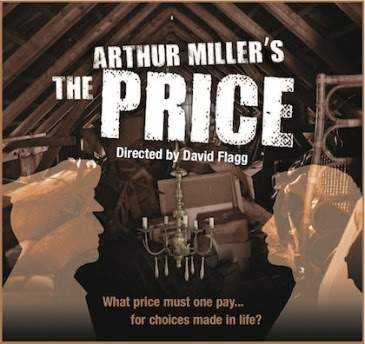
In 1968, I remember seeing on Broadway the play, The Price, by Arthur Miller. A father dies. Two brothers show up to deal with the selling of the furniture - and they are waiting for a buyer. One brother says to the other brother something like this, “You want the God-almighty handshake and you’re not going to get it.” One brother had left home and went to college and became a doctor while the other brother stayed home to take care of their dad - and became a policeman.
 
Is that when I realized for the first time that some people won’t forgive some people - especially family members?

That play by Arthur Miller got me to think deeply about that question.

As Shakespeare puts  it in Hamlet, in the play he devises within the play, “The play’s the thing / Wherein I’ll catch the conscience of the king.”

I’ve seen the movie, Shawshank Redemption at least 7 times and every time something different hits me. Being a Redemptorist - I hope I’d notice redemption stories - salvation stories - people being stuck stories - imprisoned stories - becoming free - and longing for freedom stories.

I often think of Andy Dufresne’s line in that movie, “I guess it comes down to a simple choice, really. Get busy living or get busy dying.” 

So the title of my homily is, “The Power of a Parable.”

DAVID’S STORY

Today’s first reading from the Second Book of Samuel - refers to the life of David the King of Israel.  He rose from the life of the youngest brother in a big family of brothers - and a shepherd - to becoming a fighter - then the king of Israel.  Then his life got soft.

If you’ve seen the comedy movie, History of the World Part I, Mel Brooks says over and over again, as he breaks all the rules - and does anything he wants to do, “It’s good to be the king.”

So David spots Bathsheba taking a bath and the king wants what he wants when he wants it and steals another’s man’s wife: Uriah the Hittite.

Then when she tells David she is pregnant, David brings Uriah home - but he won’t go to his house because he knows what’s happening. So David has Uriah killed.  We hear that in today’s first reading.  It’s Soap Opera stuff in the 11th and 12th chapter of book Second  Book of Samuel.

And Nathan the prophet hears about the story. He goes to the palace and tells David, “David I want to tell you a story, a parable.” It’s in the 11th Chapter of the Book of Samuel. He tells David about a rich man who has a huge herd of sheep and he has a guest coming for dinner. Instead of having one of his sheep slaughtered for the feast, he steals the sheep of his neighbor down the road - who is dirt poor and has only one sheep.

David upon hearing the story yells, “Who is that man who did this? He deserves to die. If he’s part of my kingdom I’ll have him pay back fourfold.”

And Nathan the prophet says, “That man is you!”

And Nathan points out that David has a harem - many wives. He doesn’t mention how he got some of them - only Bathsheba.

And here in our reading in Chapter 12 of Second Samuel, David takes the parable, the story, and points it at himself and repents.

I’m sure some of you heard in sermons and talks that Louis Evely, a Belgian priest and writer wrote a whole book on that phrase, “That Man Is You.”

HOW TO READ THE BIBLE

That story from Nathan the prophet - that book by Louis Evely - was an eye opener for me.

That 1964 book  taught me how to read the scriptures.

I open up the Bible. I start reading. I start saying: “That man is me.”” That woman is me.” “That person is me.” “That character is me.”

I read the story. I read the saying. I read the parable and I ask, “How is this story, this parable, this comment, me?”

I am the prodigal son - who needs forgiveness. I am the older brother - who won’t forgive a family member. I am the forgiving father. I am the lost sheep, the lost coin. I am the man wounded, hurt, on the roads of life and I need someone to help me. Or I am called to be the Good Samaritan. Or I am like the two characters in the parable of the Good Samaritan who walk by people who are hurting. I am wheat or I am weeds. I am a tree producing good fruit or bad fruit or no fruit. I am Adam. I am Eve. I am Judas or I am Peter. I am David or Uriah or Bathsheba.
Wu Yuen-kwei, Her Sins Are Forgiven

In today’s gospel, we heard about the Pharisee who invites Jesus to eat with him. Don’t we all want to eat with Jesus? Isn’t that why we are here today? Next a woman comes into the house because she heard Jesus was there. She starts crying. The tears fall on Jesus’ feet - washing them. She dries his feet with her hair. She kisses his feet. She then anoints his feet with the precious perfumed oil she had with her.

The Pharisee thinks - and Luke tells us what he is thinking - and that Jesus knows what the Pharisee is thinking. “If this Jesus is a prophet, he would know who and what sort of woman this is who is touching him, that she is a sinner.”

Then Jesus says to Simon, “I want to tell you a story.”

Simon says  the same thing David said to the prophet Nathan in the Second Book of Samuel, “Tell me the story!”

Jesus says, “Two people were in debt to a certain creditor; one owed five hundred day’s wages and the other owed fifth. Since both were unable to repay the debt, he forgave them both. Which of them would love him more?”

Simon answers, “The one, I suppose, whose larger debt was forgiven.”

Then Jesus says, “You have judged rightly.”

Then Jesus turns to the woman and says to Simon. “Do you see this woman? When I entered your house, you didn’t give me water for my feet, but this woman   bathed my feet with her tears and wiped them with her hair.  You didn’t greet me with a kiss, but she has not stopped kissing my feet since the time I entered. You didn’t anoint my head with oil, but she has anointed my feet with ointment.”

We know how David took the story from Nathan. We don’t know how the Pharisee too this story from Jesus.

We do know that Jesus says about the woman, “So I tell you, her many sins have been forgiven because she has shown great love. But the one to whom little is forgiven, loves little.”

Then he says to the woman, “Your sins are forgiven.”

The others at the dinner table said to themselves, “Who is this who even forgives sins?”

Jesus doesn’t respond to them, but says to the woman, “Your faith has saved you; go in peace.”

We all heard the story?

Am I the Pharisee? Am I the woman? Am I Jesus? Am I the others at the table?

That man…. that woman …. is me.

CONCLUSION

These stories in the Bible are for folks long after they happened.  These stories are for you and me.

I worked in a retreat house in Pennsylvania for 7 years and a well know Mafia guy used to come on retreat and the men complained and finally the priest in charge said, “Aren’t you glad he’s here?”

I’ve been in churches where folks complained about women’s cleavage, elected officials, so and so being at Mass - and I wasn’t Nathan enough or Jesus enough or a priest I worked with enough to say, “Aren’t you glad she’s here? Aren’t you glad he’s here?”


Better I should have said, “I’m tempted to say, I’m glad you’re here, but I better say, I’m glad we’re here.”

Saturday, June 11, 2016

June 11, 2016


EASY OR COMPLICATED?

And God, I thought it was going
to get easier - this getting older.

“Ha Ha,” I laughed out loud
to God. It became a prayer,
but sometimes it’s a curse….

.... this worrying about kids and 
their kids - and health - diminished
sight and hearing - along with
dizziness and bony arthritis….

So I guess, this getting older is
an all Depends - and sometimes
you have to wear them.

Yes Them - and sometimes they
and the worries wear me out and
sometimes both seem to leak. Oooh!


© Andy Costello, Reflections 2016

Friday, June 10, 2016

June 10, 2016


WHERE ARE YOU?

WHO ARE YOU?

I've heard so many different descriptions
of so many different generations - that
I don't know where I am or just where
to stand or what criteria to use.

Psst! These are some of what I heard.

Silent Generation, Lost Generation,
Beat Generation, MTV Generation,
the Greatest Generation,
Baby Boomers,  Millennials,
Generation X, Generation Y,
Generation Z, Alpha Generation,
and there was the Me Generation, 
who were they and what ever 
happened to them?

Put a circle around where you stand
or think you stand - then look up a
description of who you are? How 
close are you to what they describe?


© Andy Costello, Reflections 2016

Thursday, June 9, 2016

June 9, 2016


WANNABE

Before 18, I’ve seen some young people
having WS, Wannabe Syndrome - actually
wanting to be someone else. Or they want
their parents or teachers or coaches to be
other than they are: to be someone else.

By 25 I’ve seen WS, Wannabe Syndrome,
switch a bit. “I have to be myself, but still
I want to be like someone else - richer,
smarter, quicker, less moody, and in better
shape like so and so or what have you.”

By 50 I’ve seen WS, Wannabe Syndrome,
disappear and a person says, “There is
nobody else I want to be - because as the
song goes, ‘I gotta be me…,’ but there are
people I know, whom I don’t want to be.”


© Andy Costello, Reflections 2016
June 8, 2016


FRAGILE: LAW OF CONSEQUENCES 

We're not born with signs

like, "Fragile"  or "Handle
With Care" - stamped on
our skin. No, it takes time
to learn how relationships
work - and don't work- and
what to do next - when we're
hurt. Oh it's great when things
are going great - but time 
slips away and we get lazy
or tired and we neglect each
other - so we really need to 
talk, really talk to each other.
We need to make covenants - 
because the one law in life
we can't break or dismiss is
the Law of Consequences. 


© Andy Costello, Reflections 2016

Wednesday, June 8, 2016


ECHO   BLESSING

[At the outdoor Mass this morning in the schoolyard, when Deacon Leroy was preaching,  I could hear the obvious echo of his words off the buildings. I thought it was neat - sort of reinforcing his words - as with a yellow highlighter. I thought to myself, if I ever have to preach at this Elementary School Mass,  I’d preach on the theme of “echoes”.   About 20 minutes after Mass, Leroy asked if was going to the church service for our St. Mary’s Teachers and Staff - and if I was, could I do the final prayer or blessing? Surprise! Here was a chance to pull some thoughts together about the theme of “echoes” as they echoed around my mind this morning. So here comes a reflection and a final blessing entitled, “Echo Blessing.”]

ECHO  BLESSING


The words went into those tiny holes in the microphone.
They sped down wires - lots of carefully placed wires -
at the speed of sound and they bounced around - and
then when came out of the speakers - they were echoes -
bouncing off walls - and into our ears. Words…. Echoes….

The words echo into corners - sit under chairs -
and there they rest for a moment or sometimes
for years - words our mom whispered into our ear
going into our first day of school  - or our 8th grade
teacher told us in a bus on a memorable  class trip.

Some words echo it seems forever - a word with
a hurt in it - as well as an, “I love you” - when we
thought we were all alone. A teacher’s words in
school can white out [what’s white out?] a put
down by a parent  at home or vice versa.

A deacon’s words in a pulpit, a principal’s words
in the opening moments of a new school year or
the closing of a school year - a grandma’s words
at a graduation - a prayer- can remain as an echo
in our heart and mind and memory forever.

And may these words of Jesus continue to echo
in your soul each day: “Love one another as
I have loved you.” “Forgive 70 times 7 times.” “Turn
the other cheek.” “Go the extra mile.” “And I am with
you all days, even to the end of the world.” Amen.


© Andy Costello, June 8, 2016 

Tuesday, June 7, 2016

June 7, 2016

TIGHTENED  FIST

Tightened fist:
every time she yelled at him
as a kid - for not making his
bed - for not eating his veggies -
for not doing his homework
immediately - like right now.

Tightened fist:
every time a teacher punished
him - every time a coach pushed
him - every time a classmate hit
him on the bus - back and forth
to school or in the playground.

Tightened fist:
every time he fought back -
that is till he learned it's
not smart - others are
sometimes bigger and
quicker than he was.

Tightened fist:
every time his mind tightened
when people talked politics - till
he realized these moments were
causing him spiritual arthritis long
before most people get real arthritis.


© Andy Costello, Reflections 2016
STUFF AND SPIRITUALITY


INTRODUCTION

The title of my homily for this 11th Tuesday in Ordinary Time is, “Stuff and Spirituality.”

Stuff and spirit … the visible and the invisible … the concrete and the abstract….

The stuff of spirituality is often mystery, concepts, ideas, ideals, virtues, etc. etc. etc. Notice they are abstract. Notice the stuff of spirituality is invisible.

We can read body language and guess what another is feeling or thinking, but we can never know for sure. 

Motives, judgements, reasons are all invisible and many times we’re just guessing - until the other tells us what they thinking - till they explain their “why” or the “what” they were trying to say or do. 

The stuff of spirituality has the possible trap of being or becoming a Pharisee.

And at times even people explaining themselves  - are not that sure of themselves in the first place.

Honestly, our motives can be tricky - mixed - sneaky - unsure - or even dishonest.

So the stuff of thinking and communication and the stuff of spirituality is often invisible.

This hit me in a reverse way - when I began to notice last night in today’s 2 readings and the Psalm in between - that the stuff of these 3 readings mention lots of stuff we can see and taste and get our hands on.

FOR EXAMPLE

The first reading from  1st Kings 17: 1-6 mentions specific objects: rain, a brook, land, the entrance of a city, sticks, a cupful of water, a bit of bread, a handful of flour in a jar, and some oil in a jug. We can picture each item.

The Psalm, Psalm 4, mentions a face, some shining on that face, beds, grain and wine. It mentions the heart - but I assume the song writer is talking about the heart as the center of a human being - which is invisible.

The gospel - part of the Sermon on the Mount - Matthew 5: 13-16 - mentions salt, a light, a city, a mountain, a lamp, a bushel basket, a lampstand, and a house. We’ve seen them all.

THE STUFF OF SPIRITUALITY

Can we see some spiritual realities in these visible objects?

I can remember hearing someone describe what our Redemptorists in Colombia, South America do when preaching a parish mission. They gather in a church building - and then take a crowd for a tour of the city or the town - like one sees folks in colonial outfits and costumes taking folks around Annapolis for tours.


With a bullhorn in hand, these Colombian Redemptorists speak out. They point to a light on a building or a street light and proclaim that Jesus is the light of the world. They would go by a restaurant and point to the salt on tables inside and out. Then they would say, “Jesus calls us to be the salt of the earth. We're called to season our homes and our conversations with the love of Christ.”  They would point to a door - like our doors of mercy here at St. Mary’s this year, and say Jesus knocks on our door.  Or they would point to an building with a second floor and mention that Jesus goes through the thick walls of our skulls - to our upper room - and proclaims peace to us. They would go by little children and repeat Jesus call for us to be like little children or not to hurt little children and if we give kids bad example, it would be better if a millstone was tied around our neck and we were tossed in the sea to drown.  Serious messages.

I like to write Irish Blessings and I noticed in studying Irish Blessings and Irish prayers how down to earth they can be. They  bring in stuff: rocks, bogs, wind, ankles, roads, canes and crutches - to show us sightings and sensings of God.  

A THOUGHT FOR THE DAY

So my thought for the day is to pause from time to time and look around and see God and messages in what surrounds us - to go from the known to the unknown.

We have lots of alleys and streets - and the water -  all around Annapolis - and lots of restaurants - and ice cream places - and gift shops - trying to get tourist dollars. In my search for God am I on the broad way or the narrow alley? What am I looking for? Am  I a gift? Am I sweet? Am I a treat to be with? Is Christ the living water I am thirsty for? What am I hungry for?


I am sure if the Redemptorist priests of Colombia were preaching here in Annapolis, they would say something about the Alex Haley statue and the kids sculpture at the edge of Ego Alley and talk about slavery’s impact on the United States and our Civil War.  I am sure they would say something about all the Latino and Hispanic workers in so many kitchens of the restaurants of Annapolis - and the value of migrations. For the sake of transparency my mom and dad came to America from poverty and did tough jobs.  My mom cleaned hotel rooms in Boston and was a maid. My dad worked for Nabisco in New York and New Jersey and never made over 100 dollars a week.

Do these specifics - about stuff - a salary - cooking and cleaning - get us to be a better Christian when it comes to concerns for our brothers and our sisters.


Do we see the waiter or waitress at every restaurant doing what the widow does for Elijah in today’s first reading - bringing the customer some water and some bread?  Do we see ourselves as Jesus calls us to be - salt and light for each other? Amen.

Monday, June 6, 2016


THE  SERMON 
ON THE MOUNT


INTRODUCTION

The title of my homily for this 10th Monday in Ordinary Time is, “The Sermon on the Mount.”

WEEKDAY MASS GOSPEL READINGS

We start today with the Gospel of Matthew - Chapter 5 - having just finished the Gospel of Mark at the end of Chapter 12 on Saturday.

Those who put the readings together for these weekday Masses skip Mark’s next section: Jesus eschatological message about the End Times - which then runs into Chapter 14 of Mark - Jesus’ Passion and Resurrection - which will bring us to Palm Sunday - the beginning of Holy Week.  So I assume that they saw that as a natural place to move over to the next Gospel Matthew.

In a given year for weekday Gospel readings we go through Mark, Matthew and Luke - in that order. John is featured during the Easter Season mainly.

So today we begin Matthew - Chapter 5 -  and then switch over to Luke at the end of August.

The Gospel of Matthew begins with his Infancy of Jesus stories - Chapters 1 and 2. Then in Matthew 3 and 4 we have Jesus as an adult - beginning with the preaching of John the Baptist. That’s Chapter 3. Then in Chapter 4 Jesus goes into the desert for 40 days, comes out, and calls his first 4 disciples and starts his ministry.

Chapter 5 begins the Sermon on the Mount - with the Beatitudes - and goes 3 chapters - and we’ll have this sermon for 3 weeks of Gospel readings - today till Friday in the 12th week.

That’s the big picture. I like to line things up like that for my own sense of the weekday readings - and I mention all this because you are weekday Mass goers.

IF YOU ARE GOING TO START READING THE BIBLE

That’s the readings at Mass. Now if you are like lots of folks, who say they want to  start reading the Bible, I like to add, “Don’t start on Page 1.”

The Bible is a library - and most people don’t walk into a library and read the first book they meet when they come in the door. They browse.

So browse, but if you want a suggestion, I always like to suggest starting with James, because if you don’t get James, forget it.

I could say the same of the Sermon on the Mount. If you don’t get Jesus’ messages here, forget it.

Matthew gives us some great messages in the Sermon of the Mount.

There is a theory that there was a document that the person or persons who put together our Gospel of Matthew  had in hand. It is called Matthew Q. It has disappeared - but still a copy could be found. Wouldn’t that be great? Hey they found the Dead Sea Scrolls in 1948 in caves - after being hid for some 2000 years.

Q stands for the German word, Quelle. It means “source”.

The theory - and it’s only a theory - is this: Matthew Q is the source for Matthew. They imagine it to simply be a long list of the sayings of Jesus. 

I remember giving a woman’s retreat once and by accident I had all the women break up into small groups. I asked them to come up with sayings their mother always used to say. Then women reported to the large group  the best ones they came up with.  I always regret that I didn’t jot them down.

I see Matthew Q as a listing of some of the great sayings of Jesus.

And the Sermon on the Mount is simply a listing of some of the great sayings of Jesus.

For example, “Turn the other cheek….”  “Go the extra mile.”

Ray Brown, the great Sulpician Scripture scholar points out that Matthew in the Sermon on the Mount goes beyond the Gospel of John. In Matthew Jesus tells us to love our enemies and pray for those who persecute us …. Ray Brown adds that John does not go into one’s enemies.  Ray Brown adds that we could also say that sometimes it’s more difficult loving the ones we’re with than loving the enemies, the strange, the strangers. [Cf. Raymond E. Brown, An Introduction to the New Testament, page 377.]

THE SETTING

Okay that’s a few comments about the Sermon on the Mount which we start today with the Beatitudes - which we hear at many weddings and funerals.

Before I finish, let me mention a wonderful moment in my life. I was on a retreat for priests. We went to Israel in January of 2000. We got off the bus at various spots in the Holy Land. One obvious place was the possible site for the Sermon on the Mount.

Our leader, Father Stephen Doyle, led us into the Church of the Beatitudes. We prayed and he then read the Beatitudes and told us we have an hour of quiet prayer - there in the church - or we could go outside.

I went outside and looked down this big field that lead to the Lake of Galilee. While sitting there on a rock I saw 5 buses go down this road and then they stopped.  I’d guess there were 50 people per bus - so they got out and walked down a bit and entered this  big field.

They looked like they were Korean pilgrims. We had seen a lot of them in the Holy Land.

Then their pastor or priest started reading from the Bible. I’d assume he was doing what the priest who was leading us had just done - read something from the Sermon on the Mount.

CONCLUSION

These next 3 weeks at weekday Masses, we will be doing the same thing. We’ll be doing the same thing Christians have been doing for some 2000 years - listening to the Sermon on the Mount.

General Omar Bradley in an address on Armistice Day, 1948, said, “We have grasped the mystery of the atom and rejected the Sermon on the Mount.”
June 6, 1944

A  D  DAY

Why not? I’ll take it. Life ….
A delicious day - a D Day….
I would want them every day….
A June wedding to a wonderful wife….
A beautiful daughter a year later….
A dancer, a smile, a compliment about her
every time we go to church or the store….
A son, our  second child,
curly brown hair, a laugh you can hear
from every corner of the playground….
Mom and dad, on both sides, still very
much alive and they love to see and be
with and baby sit for our kids…. honestly….
A decent jobs, that’s another d… decent….
A great house in a very friendly
blue color neighborhood….
A third kid, another girl, a fourth kid,
another boy - and all is still going
so,  so wonderful - no D-Day, death
or disaster, the Sixth of June, 1944
on our calendar so far…. Thank you,
God, for so, so much  - so far - and
for so much more to come….

© Andy Costello, Reflections 2016

Sunday, June 5, 2016


STEPPING  BACK, 
THEN  STEPPING  UP 

INTRODUCTION

The title of my homily is, “Stepping Back, Then Stepping Up.”

Let me actually do that for a moment. [Pause! Step out of the pulpit. Go over to the side or into the sacristy. Then step back into the pulpit.]

That’s my whole sermon without words.

And I guarantee you - that you won’t remember any words from this sermon. That’s rare - but you might remember that  a priest once stepped out of the pulpit and then stepped back up into the pulpit. You might add, “I don’t know why he did that” - but I hope you do.

Now you can go to sleep.

As Jesus says to the lawyer in Luke 10:28 - after he asks Jesus the secret of life - and states that it is to love the Lord our God with our whole heart, mind and soul and to love our neighbor as yourself,” - Jesus said,  “Do this and you shall live.”

Sleep. Learn to step back - and then to step up. Do these things and you shall live.

So I am going to stress in this sermon - the importance of stepping back - pausing - and then stepping up.

TODAY’S SECOND READING

In today’s second reading from Paul’s Letter to the Galatians,  he tells the folks there some autobiographical things about his life.  We don’t know the exact date of the letter - but scholars - tell us it’s around 54 - and it’s certainly before his letter to the Romans which is dated around 58.

Paul says he used to persecute the church, Christians,  beyond measure. In fact he tried to destroy the church. He was a zealot for his ancestral traditions.

Then he tells us that he changed from this former way of life - because he experienced that God had called him from his mother’s womb to proclaim Jesus to the Gentiles.

Then he says that he didn’t immediately consult flesh and blood. He didn’t go up to Jerusalem immediately to talk to the apostles who were there and called before he was called.

Instead he tells us that he went into Arabia and then returned to Damascus. Then he gives a time frame. “Then after three years I went up to Jerusalem to confer with Cephas [that’s Peter the Rock] and remained with him for fifteen days. But I did not see any other of the apostles, only James the brother of the Lord.”

If we read the rest of the New Testament, especially the Acts of the Apostles, we find out more details about all this. Paul was stepping his way to Damascus - to destroy the Christians - fell on his face - was called out by Christ - for persecuting him, the Christ, - and then Paul’s life was changed.

But first Paul stepped back. Except for this little detail about three years in Galatians 1:18 - we wouldn’t know how long he stepped back.

RETREAT

I just finished a 3 day retreat for us Redemptorists up in our retreat house, San Alfonso, in Long Branch, New Jersey - right on the ocean.

It was on aging and the speaker, Wayne Fitzpatrick, a Maryknoll Brother - gave us some great stuff to step back and think about. Hey, we’re getting old.

At lunch a guy said to me, “It’s wonderful to sit back and listen and not have to preach all week.”

That comment was a loud and clear reminder to me of the importance of stepping back from time to time.

To shut up and to listen.

On the news yesterday and today - they are stepping back  looking at the life of Muhammed Ali.  Different folks are saying what his legacy is.

It’s good to step back and look at our life - listen to all that we have heard - and experienced.  It’s good to wonder about our legacy.

We had 4 ½ years of theology after our college experience. We had a whole year of novitiate - and I’ve made well over 100 retreats - and workshops - and more schooling in my life. And for my legacy, I spent 7 years in one retreat house and another 7 years in another retreat house - and 9 years as a novice master and 8 ½ years on the road giving parish missions, priest and nuns retreats, etc. etc. etc.

I’ve said a lot of things to a lot of people.  Did anything stick?  Did anything help? Obviously, like any parent, I wonder.

So I know - or should know about the importance of stepping back.

How about you?

ERIE PENNSYLVANIA

If I step back I can see many of the significant moments - the learning moments - of my life - big and little ones.

I’m standing in the sacristy of a church in Erie, Pennsylvania. I’m scheduled to preach at all the Masses in a big parish. Myself and a priest named Tom were  to give a parish mission there that week. It’s 8:35 AM - Sunday morning. A priest walks in. He’s a college professor who does 2 masses there every Sunday morning. The pastor told me this the night before.

He asks who I am.  I tell him I’m preaching at all the Masses - for the Mission the parish is having that week.

His jaw tightens up. He turns around and walks out.

I say, “Uh oh. I don’t think the pastor told him that someone else was going to preach at this Mass.”

At 5 to 9, he walks back in. He comes up to me and apologizes. He says, “I thought I had to preach at this mass.”

Then he pauses and says, “I have a short fuse. I learned that about myself years ago - so when something wrong happens - I just walk away - before shooting my mouth off.

Then he added, “I got back from Atlanta last night around 1:30 AM - the flight was delayed - and I got up this morning at 6 AM to work on a homily for this Mass. I would have loved to have those extra 2 hours of sleep.

I never forgot that moment - that learning - that great homily - he preached to me that morning.

The title of my homily is, “Stepping Back, Then Stepping Up.”

It’s good to sleep on these things.

THE CHILD WITHIN

To be practical, let me add a twist to my thoughts - before I finish this homily. I’m doing this because I want to bring in the two other readings as well as give you something more to step back and think about.

Today’s first reading and today’s gospel have 2 healing stories - Elijah and Jesus raising a child from the dead.

We can hear that story the obvious way: 2 healing stories - 2 resurrection stories - and pray and wish the same - for all the young children who die without having had a chance to live.

And that’s part of the history of our world.

I read these readings while on retreat this past week - to let them simmer in my mind while walking - while driving back - while stepping back - while sleeping.

What hit me was the psychological insight - or theory  - or practice of Eric Bern that he started thinking, talking and writing about. It was very popular back in the 1950’s till the 1970’s. I’m sure some of you remember the books, I’m OK-You’re OK, Transactional Analysis, and Games People Play.

Each had an impact on me. Some priests po po pop psychology. I don’t. I want to hear what others have to say.

Transactional Analysis - TA - from Eric Bern taught me that we have 3 possible states of mind and attitude we can be in: the child, the adult and the parent.

The child is feelings, the parent is finger pointing, the adult is thinking and analyzing.

We can be in any of these three states - and when we expect another to be in another state than the one they are in, we have a crossed transaction.

Some adults refuse to be adults. Some parents refuse to be parents. Some people refuse the inner child within them to play the child at times.

We have those tapes ready for play in our brain - and different people and different circumstances trigger reactions and we reach for one of those 3 tapes. This is not fair and we storm out of the room in anger - but we can also come back and explain to the other what happened.  And / or we can scream at the other and tell them never to do that again.

With today’s gospel, I want to think more about the child in me - and thank the Lord he has not died - but to be alive and play more.

CONCLUSION

The title of my homily is, “Stepping Back, Then Stepping Up.”


I hope all of us - this week - find ourselves - stepping back - as adults - and we analyze our life - and then step up - and make life sweeter for each other - especially being playful. And  okay - making sure the parent and the adult in us is also very much alive - as well as the Jesus in us. Amen. 


June 5, 2016

NATURE’S  LITTER

Rocks, some broken branches,
some dead, dried leaves from
last autumn, strewn on the path,
as I meandered through the woods….
Yet they didn’t bother me - like empty
beer cans, hamburger cartons and
plastic bags do. What does it take to
get folks to be more thoughtful when
it comes to keeping streets, parking
lots and a walk through the woods
clean and clear of human litter? No, I
wouldn't empty a garbage bag of egg shells
and milk cartons on their living room rug.


© Andy Costello, Reflections 2016
June 4, 2016


HOME:
A SCENE FROM PSALM 23 

It's been raining, raining, raining,
for the longest time now. Then it 
stopped and with the sun and with 
June here finally and forever, 
everything was green, green, green.

Death, death, death, too many deaths
for the longest time now. Then it 
stopped and with God and love we
were here together and forever, and
everything was green, green, green. 

In the cemetery where our family plots
and spots were - everything was green,
green, green, but also in the dark, dark
valley we all had to go through till here
we are  - all together forever in heaven.


© Andy Costello, Reflections 2016